Uthrive: Rewards & Cashback
- 4.2
- Rating
- 10.00K
- Installs
- Free
- Price

 Analysis by App-foxy
I tried Uthrive: Rewards & Cashback as a practical finance companion rather than treating it like another coupon board. The idea is straightforward: connect the credit cards you already use, let the app surface relevant offers, and make cashback easier to notice before you pay. In daily use, that makes the app most interesting for people who already juggle several cards and regularly forget which one offers the better return.
My overall impression is positive but measured. Uthrive.club has built a focused tool around credit-card rewards and cashback discovery, and its free entry point makes it easy to test. It is not a replacement for a bank app, a budgeting service, or a complete personal-finance dashboard. Its value depends on whether the offers match your spending and whether you are willing to check the recommendation before completing a purchase.
How Uthrive fits into everyday spending
The app belongs in the finance category, but I would think of it as a decision helper at the checkout stage. Instead of asking you to manually compare every card benefit, it aims to bring the useful choice forward when you are considering a purchase. That distinction matters. A budgeting app helps you understand where your money went; Uthrive is intended to help you choose how to pay before the money leaves your account.
You May Also Like

 Pandora - Music & Podcasts
Pandora’s Music Is Easy to Start, but Harder to Recover
Pandora’s strength is its low-effort path from a seed to a station. Its weak spot is how much confidence it asks you to place in connection, setup, and quiet recovery.

 8 Ball Pool
 Is Built on Rivalries, Rematches, and Routine
A close look at the rivalries, rematches, shared routines, and unanswered safety questions that turn a quick pool match into a persistent mobile community.

 Samsung Music
’s Quiet Strength Is Playing What You Already Own
Its reach comes less from spectacle than from dependable access to a personal library. That simplicity is both the app’s strongest retention engine and its ceiling.

 AccuWeather: Weather Radar
AccuWeather Review: A Quick, Clear Forecast for Everyday Decisions
For everyday plans, the best forecast is the one you can understand quickly. AccuWeather makes rain timing, radar, and local conditions easy to act on, with a few trade-offs.

 Hill Climb Racing
Why Hill Climb Racing Still Turns Crashes Into One More Run
A tiny car, a bumpy hill and one more upgrade: Hill Climb Racing keeps resurfacing because its simple chaos makes every near-miss feel personal.

 AliExpress - Shopping App
AliExpress Makes Global Shopping Feel Personal, but Shoppers Bear the Risk
AliExpress turns a global marketplace into a pocket-sized discovery engine. Its reach is useful, its shopping loop compelling, and its trade-offs easy to miss.
More From Our News Desk
View All News


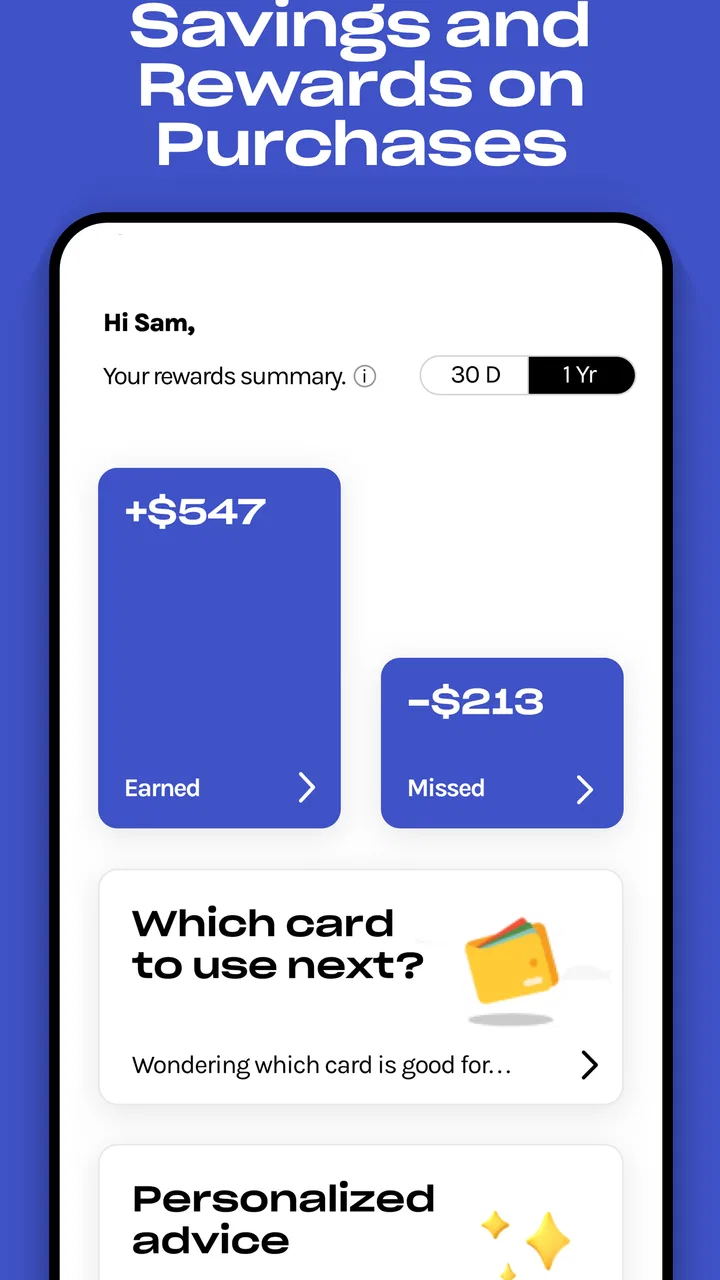
The store summary points toward more than four hundred dollars in possible cashback, along with automatic offer activation and reward maximization. I would treat that figure as an invitation to explore rather than a promise of personal savings. Cashback depends on the cards you hold, the merchants you use, the terms attached to each offer, and whether you remember to use the recommended card. The app can reduce the effort of finding opportunities, but it cannot make an unsuitable purchase worthwhile.
That makes the best audience fairly clear. Uthrive is a good fit for someone who uses credit cards responsibly, pays attention to rewards, and wants a lighter way to keep track of rotating opportunities. It is less suitable for somebody who wants one simple debit card, avoids rewards programs entirely, or is likely to spend more just because an offer appears.
The first setup decision is more important than it looks
When I evaluate a rewards tool, I pay attention to what happens before the first recommendation. The useful question is not simply whether the app displays offers; it is whether the setup leads to advice that reflects the cards I actually use. Uthrive’s purpose depends on that connection. If you skip cards, misunderstand an offer, or add an account you rarely use, the resulting suggestions may be less helpful even when the interface works correctly.
I recommend starting with the cards you use most often, then checking whether the app’s recommendations make sense against the benefits you already know. This is one of the more practical ways to catch an unsuitable suggestion early. It also prevents a common mistake with reward apps: assuming that the highest-looking percentage is automatically the best option after exclusions, spending limits, or redemption conditions are considered.
Another useful habit is to keep the app in a supporting role. I would not open it every time I buy a low-cost item, but I would check it before a larger planned purchase, a recurring subscription, or a shopping trip involving several merchants. That workflow keeps the convenience while avoiding the feeling that every small transaction requires research.
What the current version tells me
The current release is version 2.3.7, and the app has been available since November 4, 2021. Those details place it beyond the stage of a brand-new experiment. It has had time to establish its basic direction, while the version number suggests an actively maintained product rather than a one-screen concept that was published and forgotten.
At the same time, a version number alone does not tell me that every edge case has been solved. Rewards products are especially dependent on changing merchant terms, card benefits, and activation rules. I judge the present version by how clearly it helps me make a decision, not by assuming that a later-looking release automatically means complete coverage.
For existing users, the most meaningful effect of ongoing development is likely less about dramatic reinvention and more about reliability. A cashback app has to remain useful as offers change. If Uthrive keeps the process of finding and activating relevant opportunities simple, people who already have their preferred cards can continue using it without rebuilding their entire financial routine.
The app has a 4.2 average from around 281 ratings, with roughly 87 written reviews. I read that as a reasonably encouraging signal, though not a substitute for testing it with your own wallet. The audience is also relatively modest at over 10 thousand installs, so I would not compare its public footprint with that of a major banking platform. Its smaller scale can feel focused, but it also means I would personally verify important reward details before relying on them for a significant purchase.
A realistic shopping routine
Imagine that I am planning a household purchase and have three credit cards: one for general rewards, one with stronger benefits at selected retailers, and one I keep for a particular category. Before checking out, I open Uthrive and look for a relevant offer. If the app points me toward a card I already carry, the recommendation saves me from searching through separate issuer apps or trying to remember which benefit is active.
The important part is what happens next. I would compare the suggestion with the purchase terms, confirm that I am using the correct card, and save a note if the offer has a condition that could be easy to forget. I would not assume that seeing an offer means the reward is guaranteed. This three-step check—find, verify, then pay—is a better workflow than blindly following the first number displayed.
For recurring bills, I would be more cautious. A card that is attractive for a one-time purchase may not be the right choice for a subscription if the offer is temporary or restricted. Uthrive can help me notice an opportunity, but I still need to decide whether changing the payment card is worth the administrative hassle. That is a useful trade-off the app cannot decide for me.
Where it improves on the usual alternatives
The usual alternative is to manage rewards manually. That means opening several bank apps, reading promotional messages, checking card benefit pages, and remembering which offer needs activation. Manual tracking gives me maximum control, but it is easy to abandon when the process becomes repetitive. Uthrive’s appeal is that it tries to put the discovery step in one place.
Compared with a bank’s own rewards area, Uthrive can be more useful for people who use cards from different issuers. A single-bank tool naturally centers on that bank’s products, while a dedicated rewards app is designed around the broader problem of choosing among cards. I would still keep the official issuer app available because it remains the better place to inspect statements, payment status, and account-specific details.
Compared with a coupon app, the distinction is even clearer. Coupons usually focus on reducing the purchase price, while Uthrive is concerned with the payment method and the reward attached to it. That makes it more relevant at the moment I choose a card, but less useful if my main goal is finding the lowest advertised price before I shop.
Compared with a spreadsheet, Uthrive should require less maintenance. A spreadsheet can be extremely precise, especially for someone who likes tracking expiration dates and reward categories, but it only stays accurate when I update it. Uthrive is the more convenient option for discovery; a spreadsheet remains better for personal records and long-term comparisons.
The friction I would expect before depending on it
Connecting financial accounts is the biggest trust decision. I would read every permission and connection screen carefully, use only accounts I am comfortable linking, and avoid treating convenience as a reason to ignore security basics. A finance app can be useful while still deserving the same caution I would apply to any service that touches information about my spending.
I also would not confuse automatic activation with automatic savings. Even when an offer is activated, I may still need to use a particular card, shop through a particular route, meet a spending condition, or wait for the reward to appear. The app’s automation can remove a tedious step, but it does not remove the terms attached to the offer.
There is another practical limitation: cashback tools can encourage optimization fatigue. If I am constantly checking whether another card might earn slightly more, the mental cost can outweigh the benefit. My solution is to set a personal threshold. For small purchases, I use the card I already know works. For larger or planned purchases, I check Uthrive and take the extra step when the possible reward justifies it.
The free price makes that experiment low-risk from a subscription standpoint, although the app includes optional in-app purchases ranging from ten cents to just under seventy dollars per item. I would not buy anything until I understood exactly what it changes for my use case. Someone who only wants occasional offer discovery may have no reason to spend beyond the free starting point, while a frequent rewards optimizer may evaluate the paid options differently.
Who should use it, and who should skip it
I would recommend trying Uthrive if you already have multiple credit cards, often shop with participating merchants, and are comfortable checking an offer before paying. It is particularly useful for people who know they are leaving rewards unused simply because they forget to activate them or cannot remember which card is best.
I would skip it if credit-card rewards make me overspend, if I prefer not to connect financial accounts, or if I want a complete budget with income tracking and spending categories. In those cases, a conventional budgeting app or the official tools from my bank would be a better match. Uthrive is narrow by design, and that focus is helpful only when cashback is the problem I am trying to solve.
It is also not the right tool for someone carrying a balance and paying substantial interest. A reward is rarely worth changing sound repayment priorities. I would use the app only after deciding that the card choice fits my budget and that I can pay responsibly. The best cashback strategy is still the one that does not create expensive debt.
What I would like users to watch over time
For current users, I would watch whether recommendations remain relevant as card benefits and merchant offers change. A rewards app earns its place on my phone when it saves time without asking me to second-guess every result. Clear offer details, dependable activation, and a simple way to understand what applies to a purchase matter more to me than a crowded screen full of promotions.
I would also watch how the product evolves after version 2.3.7. The important question is not whether future releases add more visual polish, but whether they make the core workflow safer and clearer: identifying a suitable card, activating the right offer, and helping me understand what I need to do next. Those improvements would benefit both experienced users and people trying cashback tools for the first time.
New users should monitor their own results rather than judging success by the number of offers shown. After a few weeks, I would ask myself whether I actually used better cards, whether the reminders saved time, and whether the rewards justified the attention required. That personal review is more useful than chasing every available promotion.
My final take on the app
Uthrive: Rewards & Cashback is a focused finance app with a sensible purpose: make credit-card offer discovery less scattered. I like it most as a quick checkpoint before planned purchases, not as a replacement for account management or a reason to spend. Its free availability, Everyone age rating, and focused workflow make it approachable, while the optional purchases and account-connection decision mean I would still proceed thoughtfully.
My recommendation is simple: if you already use credit cards for rewards and regularly miss opportunities, Uthrive is worth testing as a lightweight offer assistant. Give it a short trial with your normal shopping routine, verify the terms before paying, and judge it by rewards you genuinely earn rather than offers you merely see. If you want budgeting, debt planning, or a single all-in-one financial dashboard, choose a different category of app. For the narrower job of helping me remember which card may work best, this app has a useful place in my routine.
FAQs for Uthrive: Rewards & Cashback
01What is Uthrive: Rewards & Cashback, and how does it work?
Uthrive: Rewards & Cashback is a rewards platform that may help users earn cashback, points, or other benefits when shopping through participating offers and completing eligible activities. After installing the app, users can browse available deals, follow the required steps, and check their account for credited rewards. Eligibility, earning rates, and redemption options can vary by offer, location, and account status.
02How do I earn cashback with Uthrive?
To earn cashback, you generally need to select an eligible offer inside Uthrive and complete the purchase or activity according to its terms. Some offers may require activating the deal before shopping, using a tracked link, meeting a minimum spending amount, or avoiding excluded products and payment methods. Always read the individual offer details, because cashback is not guaranteed when tracking requirements are missed.
03How can I redeem my Uthrive rewards?
Redemption methods depend on the rewards available in your account and the country where you use the app. Uthrive may display options such as cash payments, gift cards, or other rewards, along with minimum redemption thresholds and processing requirements. Before requesting a payout, verify your personal details and review any expiration dates, fees, identity checks, or additional conditions shown in the redemption section.
04Why is my cashback missing or still pending?
Cashback may remain pending while Uthrive confirms the transaction with the retailer or advertising partner. Delays can occur because of returns, cancellations, incomplete tracking, browser restrictions, ad blockers, coupon conflicts, or purchases made outside the app’s required process. If the reward does not appear after the stated tracking period, use the app’s support or missing-cashback form and keep your order confirmation.
05Is Uthrive safe to use, and what information does it require?
As with any cashback application, you should review Uthrive’s privacy policy, permission requests, terms of service, and payout conditions before creating an account. The app may require contact or payment information to manage rewards and process redemptions, while shopping activity may be used to verify eligible transactions. Download it only from an official app store, use a strong password, and avoid sharing verification codes.
Pros
- Earn cashback and rewards from eligible purchases.
- Simple interface makes offers easy to browse and activate.
- Useful for users who already shop with participating brands.
- Rewards can add value without changing normal shopping habits.
- Digital offers are convenient to access from a mobile device.
Cons
- Cashback availability depends on participating retailers and offers.
- Some rewards may require minimum spending or qualifying conditions.
- Earnings can vary considerably between purchases.
- Offer terms and expiration dates require careful attention.
- Availability and features may differ by country or region.

Uthrive: Rewards & Cashback
Gallery